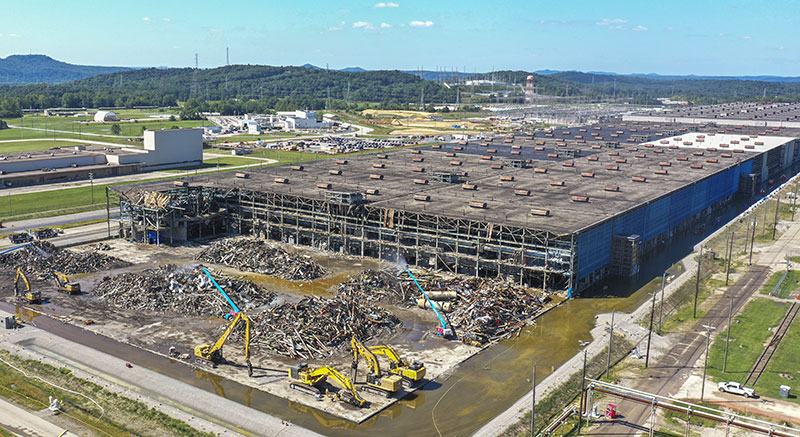
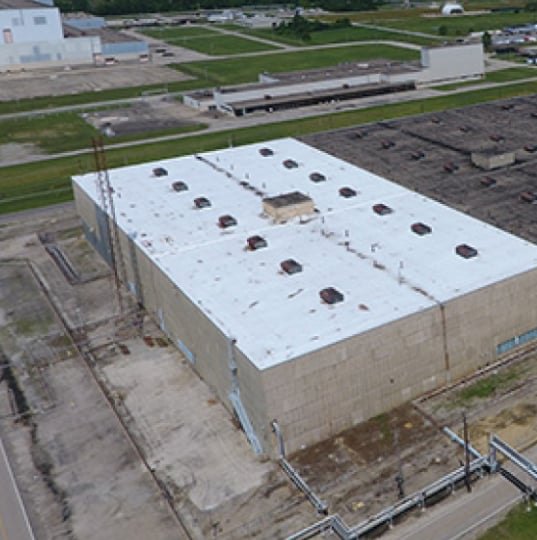
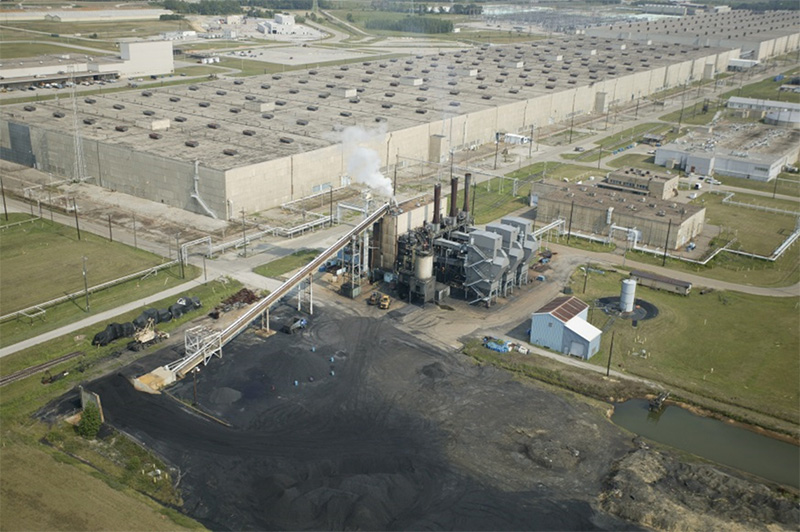
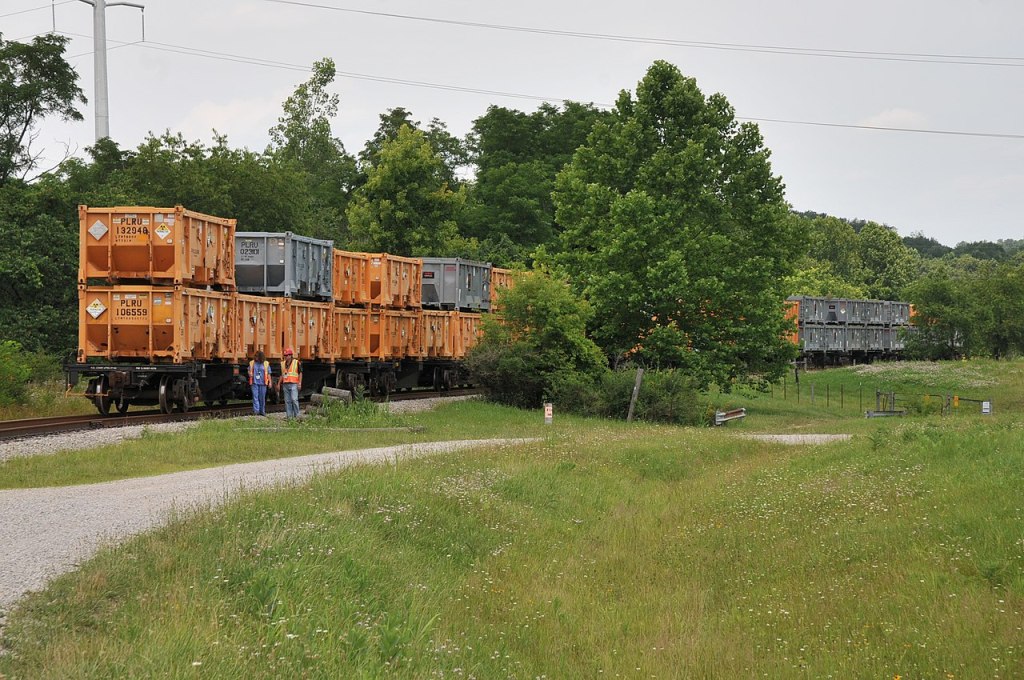
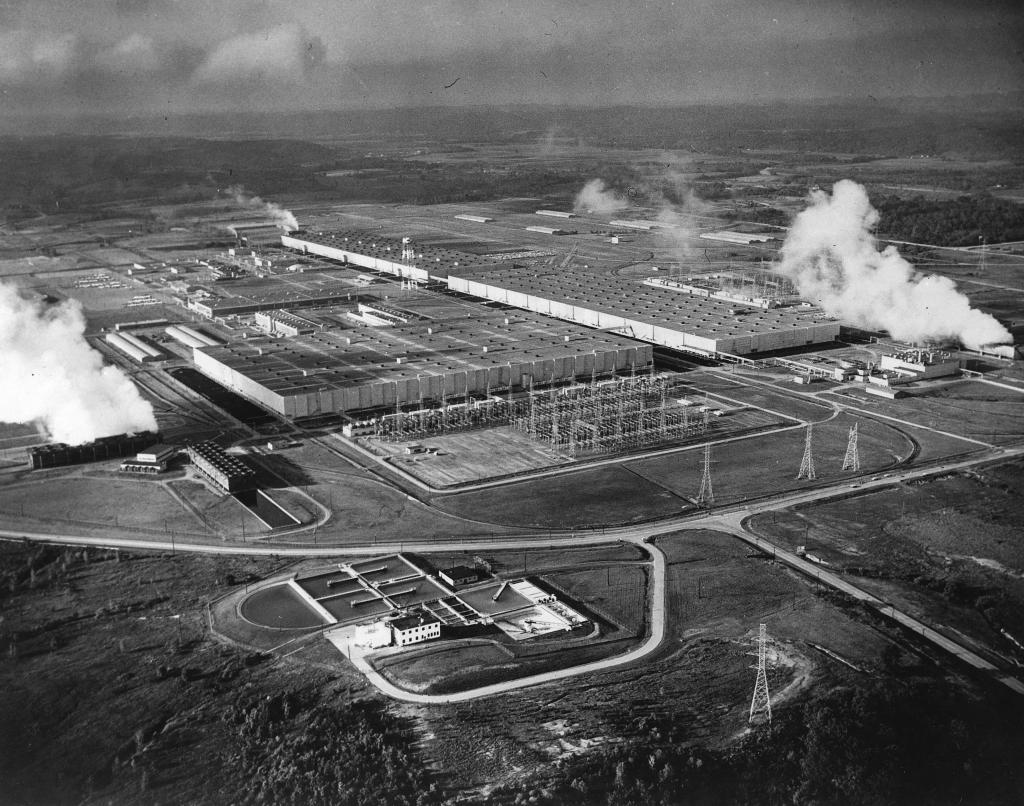
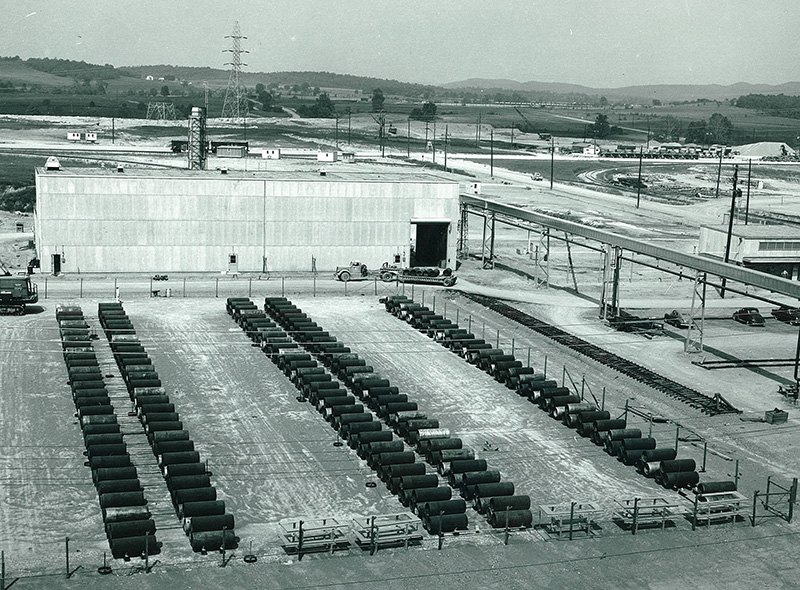
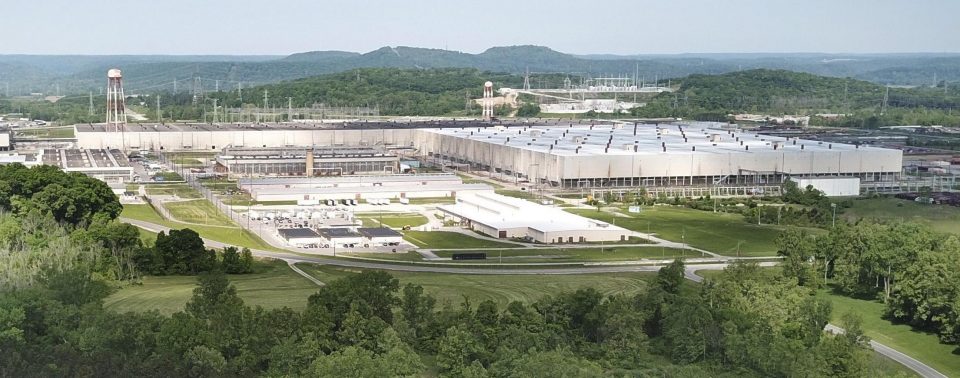
THE PORTSMOUTH NUCLEAR SITE (PORTS) is a 3,777-acre U.S. Department of Energy (DOE) facility in Pike County in southern Ohio, 23 miles from the Ohio River. The Portsmouth Gaseous Diffusion Plant (PGDP) was the site’s original, massive facility that enriched uranium for nuclear bombs. Operations started in 1954. Gaseous diffusion enrichment was monumental in scale. Three enrichment buildings (85, 75, and 65 feet tall) covered 95 acres under roof. The site used as much electricity as New York City according to the former Atomic Energy Commission. Two coal plants were built to supply electricity, burning 7.5 million tons of coal annually. In the mid-1960s the site also began producing low-enriched uranium (3-5% U-235) for fuel for commercial nuclear reactors. The Dept. of Energy (DOE) privatized the operation at a giveaway price in 1998. The new owner, USEC, Inc. operated the facility until 2001.
- Reprocessed high-level radioactive waste: Called by over a dozen names by the DOE, reprocessed high level nuclear waste was brought in and run through the enrichment buildings for years, contaminating the entire site with plutonium, neptunium, americium, technetium, multiple other radionuclides, and nonradioactive toxins.
- Environmental remediation of the contaminated site began in 1989 with a consent decree between the U.S. EPA, Ohio EPA and the Department of Energy. Production ended in 2001. DOE delayed cleanup by putting the plant on “cold standby” until it was officially closed in 2005.
- Ohio’s Nuclear Legacy: Troubled Past, Uncertain Future: The Dayton Daily News series by this title was published in 2006. The report detailed how “The Piketon plant leaves poisoned land, sick workers in its wake.” Some of the articles from the long report are still available online by searching for the title.
- Site Specific Advisory Board (SSAB): In 2008, under pressure from U.S. Senator Sherrod Brown, a long-overdue citizen advisory board was created to oversee cleanup. A year later, 3 members resigned from the board, citing DOE’s failure to abide by its own regulations barring people with conflicts of interest from the board. The SSAB first met monthly, then every other month, currently sporadically. DOE did not fill vacancies on the Board, often having less than half its 20 eligible members serving.
- Site cleanup started slowly due to inadequate federal funding. The cleanup budget was $458 million in 2011 and has been up and down since then. Ohio’s senator Brown pressured the national DOE to get this money – important for job retention. The DOE projects cleanup to be completed between 2034-2043. At $400+ million per year, it would be $10 billion at minimum, more with inflation.
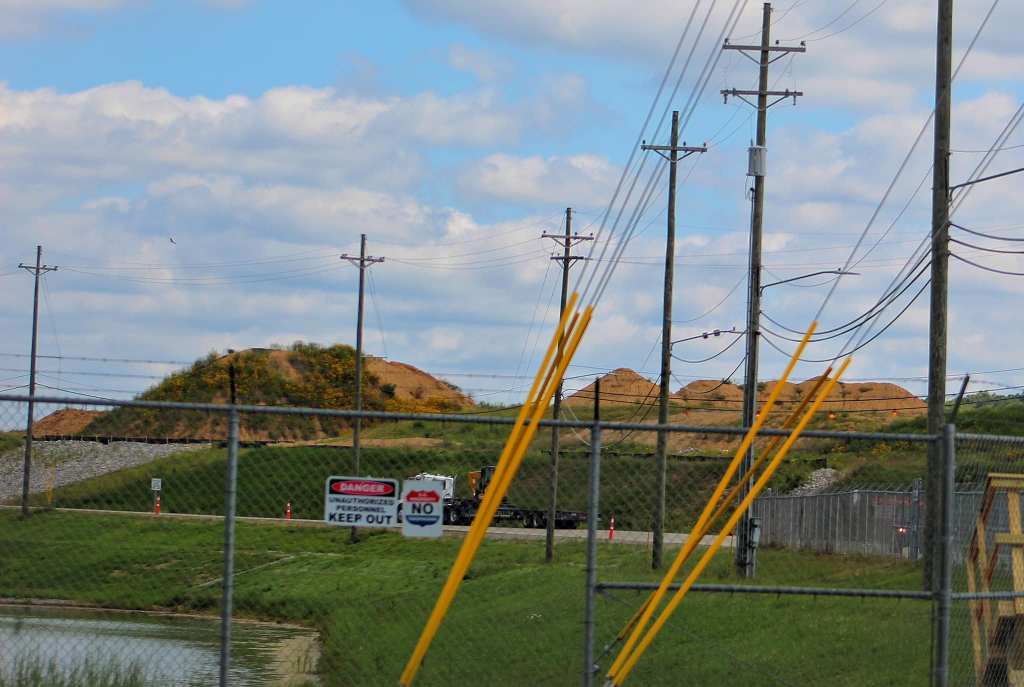
- On Site Waste Disposal Facility (OSWDF): Fluor-BWXT Portsmouth, a private entity, is building a 5 million cubic yard, clay-lined disposal facility to hold the “less radioactive” rubble from the enormous buildings. In its June 2015 Record of Decision for Waste Disposition (ROD), DOE failed to include binding parameters for disposal of radioactive waste, despite lengthy public input. The ROD and its Waste Acceptance Criteria were said by Ohio Senator Sherrod Brown to have “holes big enough to drive a convoy of trucks through.”
- Fractured rock: DOE misrepresented its own geologic study, claiming that rock under the OSWDF was intact. A geologist hired by the Village of Piketon found that the DOE’s study showed fractured rock. Any facility will leak in time, but with fractured rock below, contaminants will move more quickly to the aquifer.
- Leaking landfills left unremediated: The DOE is refusing to remediate landfills – some unlined – outside the Perimeter Road. These dumps contain highly toxic as well as highly radioactive materials. Landfills are leaking mercury into Little Beaver Creek. In 2018 the Village of Piketon and the Sierra Club made a joint statement outlining problems and recommendations regarding the DOE’s Waste Disposal Decisions. The public must continue to lobby for ALL landfills to be dug up and disposed of properly.
- The Government Accountability Office 2019 Report criticized cleanups at PORTS and other U.S. nuclear sites, saying that DOE needs to set standards and rules to cut costs and address the greatest risks.


A DANGEROUS FUTURE: In 2009, DOE gave Ohio University $500,000 to study PORTS site reuse. Results were doctored. In 2017, DOE granted themselves the right to transfer/sell all but 100 acres of the site without doing the required Environmental Impact Statement. The extraordinary decision covers all nuclear sites and waste dumps.
The relationship between nuclear power and nuclear weapons is pronounced in using DU waste to make weapons and the production of HALEU which is slated to be exported – a serious nuclear weapons proliferation risk.
MORE ALERTS! Two new nuclear reactors and nuclear fuel fabrication have also been proposed for PORTS. A facility that would obtain hydrogen from natural gas is proposed. ONFN’s flier Hydrogen at Davis-Besse, Portsmouth and Beyond outlines why large hydrogen proposals and carbon capture and storage are false energy/climate solutions.
OFFSITE RADIOACTIVITY: In 2019 Dr. Michael Ketterer, an expert on nuclear isotope analysis, reviewed the 2017 DOE Annual Site Environmental Report. The report showed neptunium in an air monitor outside the Zahn’s Corner Middle School, 4 miles from PORTS. Dr. Ketterer’s testing identified PORTS as the source of this radioactivity. DOE falsely claimed that it came from atmospheric nuclear bomb testing. The school board closed the school. DOE has given $20 million for a new school. DOE later engaged “independent” offsite sampling and a followup report (see slides) that took 4 years to complete. Properties tested had radioactivity. The report recommended followup, but DOE remains silent. Two class action lawsuits have been filed by residents claiming radioactive contamination of properties and/or illnesses related to radioactivity. A massive RICO lawsuit was filed against DOE and current and former contractors.
CANCER IN PIKE COUNTY: The Ohio Nuclear Free Network engaged Joseph Mangano, Executive Director of the Radiation and Public Health Project, to analyze cancer and death statistics in Pike County. His 2022 report, Health Risk to Local Residents from the Portsmouth Gaseous Diffusion Plant. showed that Pike County cancer mortality rose from 12% below the US in 1950 to 32.8% above the US in 2020. Pike County’s death rate was 85% above the U.S. A 2023 Mangano Report on 7 Counties Downwind of PORTS showed cancer and death rates significantly higher than 6 Appalachian Ohio counties farther east. Mangano’s latest report from Nov. 2024 shows Pike’s premature death rate to be more than twice the U.S. rate, among the highest of all U.S. counties.
Contact Pat Marida patmarida@outlook.com.





Designed with WordPress

 OHIO NUCLEAR FREE NETWORK