Centrus/HALEU
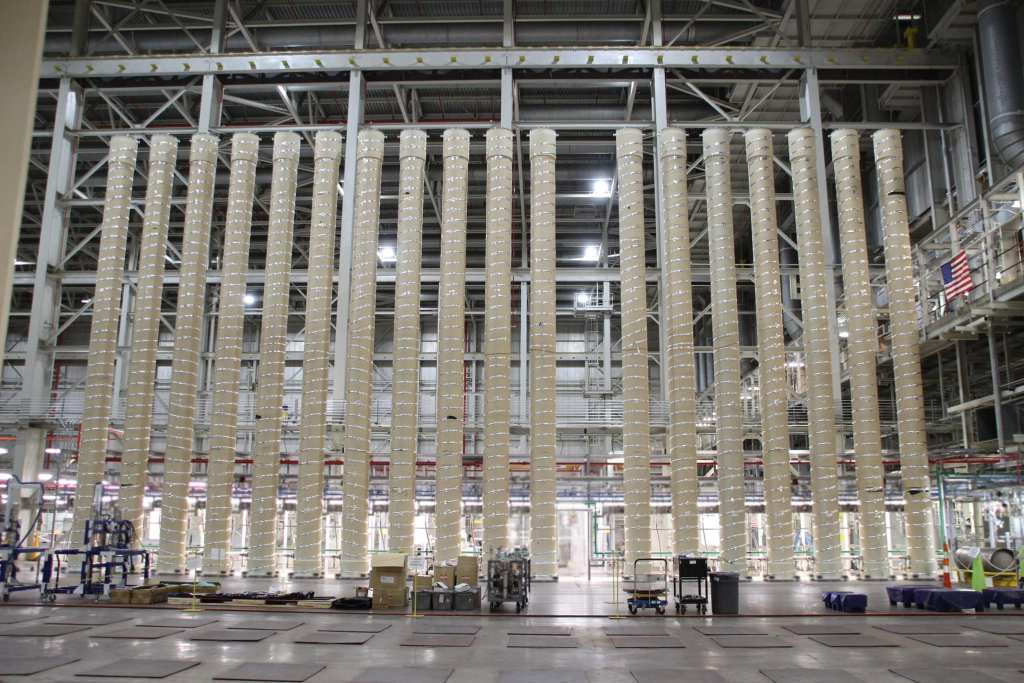
The Centrus High Assay Low Enriched Uranium (HALEU) project is located on the Portsmouth Nuclear Site (PORTS) at Piketon, Ohio. This 3,777-acre site in Southern Ohio is where uranium was enriched from 1954 until 2001 – first to make fuel for nuclear weapons and later to also make fuel for commercial nuclear power. HALEU is uranium enriched to a higher percentage of the fissionable isotope (19.75%) than what is currently used for nuclear power (3-5%). The term HALEU is confusing, because HALEU is very close to being highly enriched.
BACKGROUND: USEC, Inc. fails, becomes Centrus: About $2.5 billion (much of it taxpayer money) was put into the private entity USEC’s original American Centrifuge Plant at the Portsmouth Nuclear Site (PORTS). The U.S. Department of Energy (DOE) gave USEC hundreds of millions of dollars after USEC stock was junk-rated. USEC’s attempts to get a $2 billion DOE loan guarantee, championed by Governor Kasich (R) and senators Portman (R) and Brown (D), failed. In 2015 DOE ended fu m nding. USEC closed the facility, declared bankruptcy, and came out of the ashes with a new name: Centrus, LLC – a Limited Liability Corporation.
A NUCLEAR WEAPONS PROLIFERATION RISK! In November, 2019, the U.S. Dept. of Energy (DOE) gave Centrus a $115 million, no-bid contract to produce HALEU. The 3-year contract was for 16 centrifuges to enrich uranium up to 19.75% (an impossibly precise figure) of its fissionable isotope U-235. By definition, uranium enriched to 20% or more is high enriched, not low. Also, at 20% it is defined as weapons usable and cannot be exported. Centrus’ license allows enrichment up to 25%. Using HALEU exported from the U.S, a foreign country could not only make a dirty bomb but could fairly easily enrich it to weapons grade (90+%).
U.S. lawmakers questioned why Centrus was awarded this federal uranium contract. They asked how the contract was funded, why other companies were not allowed to compete for the award, and if there was a need for HALEU at that time. They said that if the HALEU project is for defense purposes, agencies other than the Department of Energy should provide funding.

DOE’s doublespeak agreement states that HALEU is for civilian use, while justifying a no-bid contract on the basis that a domestically owned source of enriched uranium is required for military purposes. Other U.S. enrichment facilities are foreign owned. Crossover and co-mingling between military and civilian nuclear activities not only wrecks and distorts budgets, but also allows the disguising of war activities.

If a full-scale HALEU facility is built, the Nuclear Regulatory Commission (NRC) could amend Centrus’ license to allow enrichment to weapons grade at 90+%.
Commercial HALEU won’t be needed for years, if ever. Urenco in New Mexico is the only U.S. commercial producer of low-enriched uranium (3-5% fissionable) and has plans to increase that to 10%. Their foreign-owned facility in New Mexico can meet all U.S. commercial needs. HALEU is said to be needed for yet-to-be-developed “small” “modular” or “advanced” nuclear reactors (power plants). Most of these would use only 10%. It will take a decade or more to design and build any hypothetical reactors that would need 19.75% from Centrus. HALEU can also be obtained from Idaho National Laboratory which has stockpiled tons of it. In 2019, the Arms Control Association wrote No Rush to Enrich: Alternatives for Providing Uranium for U.S. National Security Needs. Urenco’s plans to produce HALEU in New Mexico would be at a much lower price than a small, expensive Centrus facility that could cost $10 billion or more.
over
2021: No Environmental Impact Statement (EIS) required for HALEU: The Nuclear Regulatory Commission (NRC) said Centrus HALEU would have “No Significant Environmental Impact” and did only an Environmental Assessment (EA), not the required EIS. The Ohio Nuclear Free Network (ONFN) and Beyond Nuclear sent a Petition for Review of NRC’s Environmental Assessment. Grounds for Review included bypassing the EIS; segmentation of a much larger planned project; lack of a Weapons Proliferation Review; and no consideration of environmental justice, of theft or diversion, of further environmental contamination, or of alternatives to HALEU. In May of 2022, after DOE declared no need for review, the two groups appealed the license decision to the District of Columbia Court of Appeals, saying NRC violated the National Environmental Policy Act by not issuing an EIS. Unresolved questions on safety and potential criticality were highlighted. The Court denied the appeal. This was not the end of the story, however.
2022: MAKING A SHAM OF COMPETITIVE BIDS: Congress required DOE to put out a competitive bid for the HALEU demonstration project. In February, 2022, DOE asked for bids – and with a straight face, required operations to be at PORTS – where Centrus had inherited the original USEC centrifuge project and was updating the project with money from the unbid contract. Physics Today wrote a scathing article, DOE prepares to put a nearly completed uranium contract up for bid, noting that the project was 85% complete. In November 2022 DOE awarded Centrus the $150 million contract. In November, 2023, Centrus produced 20 kg. (44 pounds) of HALEU, costing $6.2 million per pound. Plans for producing 900 kg. by December of 2024 were temporarily put on hold because DOE cannot provide cylinders to hold it. DOE wants 40 metric tons of HALEU by 2030.
2023: DOE REQUIRES AN ENVIRONMENTAL IMPACT STATEMENT FOR HALEU after denying ONFN’s appeal for an EIS in 2022, and after the project had started. The Nuclear Energy Policy Act requires an EUS for a project as large as a full-scale HALEU plant. This EIS must cover environmental challenges from the entire nuclear cycle, including uranium mining and milling, and enrichment; transportation; radioactive waste; nuclear weapons proliferation; and threat of terrorism. In July, 2023, ONFN attorney Terry Lodge wrote Scoping Comments saying the EIS should look at offsite radioactivity from previous enrichment at PORTS as revealed by Dr. Michael Ketterer, at the fact that Pike County has the highest cancer rate of any county in Ohio as revealed by epidemiologist Joseph Mangano, at threats of nuclear weapons proliferation and terrorism; and more. In March, 2024, the Draft EIS came out. DOE essentially did no updated work, saying that studies done as many as 50 years ago were sufficient to cover the EIS. The public had 60 days to respond. Attorney Lodgeand others sent comments on the draft, which were all summarily rejected and the EIS was approved.

Daniel Poneman, Centrus CEO: In April, 2015, the Project on Government Oversight wrote a scathing article The Revolving Door Goes Nuclear about how Poneman, who served as the number two official at the DOE, became president and CEO of Centrus in less than six months after leaving the DOE. Poneman has DOE inside knowledge and connections for getting deals for Centrus. His total compensation was $1,929,517 in 2020.
Centrus, HALEU, and Saudi Arabia: The U.S. House Committee on Oversight and Reform investigated secretive negotiations between the Trump Administration and Saudi Arabia on exporting nuclear reactors and technology. Negotiations were initiated in 2016 by a group that included former National Security Advisor General Michael Flynn, and later taken up by the White House and the industry consortium IP3 International, one of whose commercial partners is Centrus. In January, 2017, four IP3 leaders and the chief executives of six companies – one of whom was Poneman from Centrus – signed a letter to Crown Prince Mohammed bin Salman, expressing a desire for commercial partnerships between the U.S. and Saudi Arabia. In February, 2019, the House Committee on Oversight and Reform published its first report, Multiple Whistleblowers Raise Grave Concerns with White House Efforts to Transfer Sensitive Nuclear Technology to Saudi Arabia, documenting the conduct of the Trump Administration’s negotiations violating the Atomic Energy Act. That July, the Committee published its second report, Corporate and Foreign Interests Behind White House Push to Transfer U.S. Nuclear Technology to Saudi Arabia. Stay tuned as Donald Trump has regained the presidency in 2025. Contact Pat Marida patmarida@outlook.com.

 OHIO NUCLEAR FREE NETWORK
Leave a comment